Why Connected Color Workflows Matter More Than Ever Manufacturing has never moved faster. Today's color supply chains often span multiple factories, suppliers, converters, and brand owners across different regions of the world. Teams are expected to make decisions quickly, maintain strict quality standards, and deliver products to market faster than ever before. Yet many color quality processes still rely on disconnected systems, spreadsheets, email attachments, manual data entry, and fragment...
Posted 11 September 2026 by X-Rite Color

5 Material Challenges You Can Finally Measure Accurately with the CiF3200 For years, color teams across industries have faced the same frustrating truth: many modern materials are simply too small, too decorated, too textured, or too complex for traditional spectrophotometers to measure reliably. When your components don’t fully cover the aperture, or include multiple colors, intricate patterns, or uneven surfaces, your options shrink quickly. Many organizations fall back on visual assess...
Posted 16 March 2026 by X-Rite Color

Why Optically Brightened Whites Are So Difficult to Manage Optically brightened whites are everywhere in textiles, and they are also one of the most misunderstood areas of color measurement and quality control. Optical brightening agents (OBAs) are added to fabrics to increase perceived whiteness by absorbing ultraviolet (UV) light and re emitting it in the blue region of the visible spectrum. While this effect can make whites appear cleaner and brighter to the human eye, it also introduces sig...
Posted 24 February 2026 by X-Rite Color

Navigating Volatility and Embracing Innovation The textile industry stands at a crossroad, shaped by economic uncertainty, shifting consumer priorities, and rapid technological change. According to the McKinsey State of Fashion 2025 report, brands are rethinking operations to build resilience and efficiency amid tight margins and evolving global supply chains. Sustainability, digital transformation, and value-driven shopping are now central to industry strategy. Key Trends Shaping the Textile I...
Posted 19 February 2026 by X-Rite Color

In the textile industry, delivering consistent color and appearance is essential for brand reputation and customer satisfaction. As digital transformation accelerates, brands and suppliers rely on standardized file formats to communicate color and appearance data accurately across global supply chains. Three formats—CxF, AxF, and QTX—are at the heart of this process. What Are CxF, AxF, and QTX? CxF (Color Exchange Format): CxF, developed by X-Rite and standardized as ISO 17972, is ...
Posted 18 February 2026 by X-Rite Color

Advancing Surface Texture Measurement for Accurate 3D Visualization In today’s digital design landscape, color and surface texture are inseparable when it comes to accurately visualizing materials. Whether you’re working with textiles, plastics, coatings, or automotive finishes, the way a surface interacts with light—its texture, gloss, and reflectivity—can dramatically alter perceived color and appearance. Why Surface Texture Matters Historically, color has been the pri...
Posted 11 December 2025 by X-Rite Color

Windows 10 Support Has Ended: What You Need to Know Windows 10 End of Support: What It Means for Your Business Microsoft officially ended support for Windows 10 on October 14, 2025. This means no more security updates, patches, or technical support—leaving systems running Windows 10 increasingly vulnerable to security threats and compliance risks. If your business relies on legacy software or hardware, now is the critical moment to plan your upgrade path and ensure your operations remain ...
Posted 07 November 2025 by X-Rite Color

Why Benchtop Spectrophotometer Inter-Instrument Agreement & Repeatability Matter for Brand Suppliers
In today’s global supply chain, brand suppliers are under constant pressure to deliver products that meet strict color standards, regardless of where or how they are produced. The key to achieving this consistency lies in the performance of benchtop spectrophotometers—specifically, their inter-instrument agreement and repeatability. What Is Inter-Instrument Agreement? Inter-instrument agreement refers to how closely two spectrophotometers of the same make and model can replicate a c...
Posted 22 October 2025 by X-Rite Color

Top Manufacturing Trends in 2025 The manufacturing industry is undergoing a seismic shift in 2025, driven by rapid technological innovation, sustainability imperatives, and the need for greater agility. As manufacturers adapt to these changes, color accuracy and quality control remain critical to maintaining brand integrity, reducing waste, and meeting customer expectations. At X-Rite, we’re uniquely positioned to help manufacturers navigate these trends with confidence. According to indu...
Posted 14 October 2025 by X-Rite Color
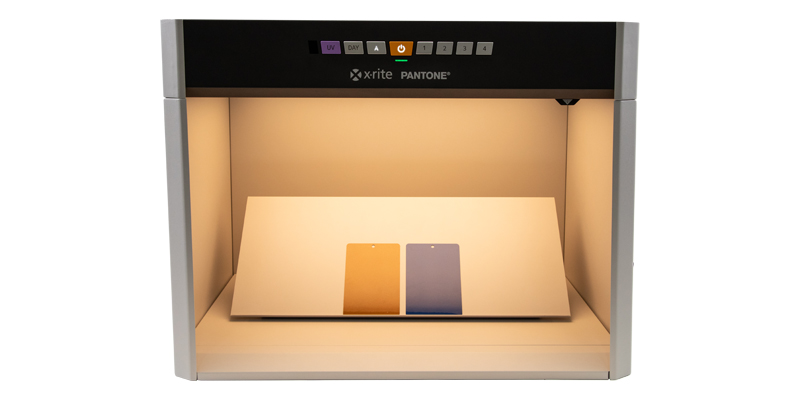
What’s the Difference Between a Light Booth and a Lighting Box? When it comes to achieving consistent lighting for color evaluation, photography, or product display, two tools often come up: light booths and lighting boxes. While they may sound similar, they serve different purposes and are designed for distinct use cases. In this post, we’ll break down the key differences between the two and help you decide which one is right for your needs. What Is a Light Booth? A light booth&mdas...
Posted 31 July 2025 by X-Rite Color

Color Matching Machines for Retail Paint Solutions In the world of retail paint, precision in color matching is crucial. Having the right tools to ensure accurate color matching can make all the difference. Enter the color matching machine—a revolutionary tool that ensures your paint colors are consistent, vibrant, and true to your customer's vision. What is a Color Matching Machine? A color matching machine is a device designed to measure and match colors with high precision. These mach...
Posted 11 July 2025 by X-Rite Color

従来の品質管理プロセスがグローバルブランドにとってもはや通用しない理由 繊維製造の世界では、品質管理 (QC) は単なるチェックポイントではなく、ブランドの約束です。アディダスやH&Mのような世界的リーダー企業と取引のあるサプライヤーにとって、リスクは大きくなりました。色や仕上げに不一致があると、コストのかかるやり直しや出荷拒否、さらにはブランドからの取引の喪失につながる可能性があります。 品質管理のプロセスが依然として目視評価、手動ログ、または物理的な標準に依存している場合は、時間、費用、機会を浪費している可能性があります。現在の Q品質管理プロセスがメリットよりもデメリットをもたらしていることを示す 5 つの警告サインを以下に示します。 1. 高い欠陥率が当たり前になっていませんか 欠陥は避けられませんが、どれくらいの数が多すぎるのでしょうか? 欠陥率が業界のベンチマークを超えている場合は、それは危険信号です。色の不一致、染色のムラ、堅牢度の低さなど、それぞれの欠陥は材料、労力、時間の無駄を意味します。 例: 毎週 10,000 バッチを 5% の不良率で...
Posted 10 July 2025 by X-Rite Color

Five Important Components of a Quality Control Program Step 1: Quantify Color with a Spectrophotometer Human vision is subjective—terms like “a bit brighter” or “slightly darker” are open to interpretation. That’s why spectrophotometers are essential. These instruments measure color by analyzing how light transfers through or reflects off a surface, producing a spectral reflectance curve—essentially a color’s unique fingerprint. This data-driven ...
Posted 10 July 2025 by Tim Mouw

X-Rite Video Gallery- Your Ultimate Resource for Color Education Welcome to the X-Rite Video Gallery Whether you're a novice or an experienced professional, the X-Rite Video Gallery offers in-depth color education and practical training to enhance your color management skills. Our carefully curated collection of videos provides valuable insights and expert tips designed to help you master color accuracy and optimize your workflow. In this blog, we'll highlight five must-watch videos that sho...
Posted 08 July 2025 by X-Rite Color

The Need for Industry Standards for Visual Color Evaluation in Retail LED Lighting In the retail industry, lighting is a critical factor that influences how products are perceived by customers. However, the lack of standardized LED lighting poses significant challenges that can impact both retailers and consumers. Inconsistent Color Reproduction One of the primary issues with the absence of standardized LED lighting is inconsistent color reproduction. Different LED lights can produce varying co...
Posted 11 February 2025 by X-Rite Color

Moving from Fluorescent to LED Light Booths for Color Evaluation: How the EU’s Ban Drives Innovation
The Future of Color Consistency: LED Lighting Solutions for Industry Standards For years, fluorescent bulbs have been a mainstay in industries requiring accurate color assessment, but their downsides are becoming increasingly hard to ignore. These lights require warm-up time and may distort color accuracy, both of which lead to production delays and translate into higher sample costs. More importantly, fluorescent bulbs contain hazardous materials like mercury, complicating their disposal...
Posted 28 November 2024 by X-Rite Color

Why Backward Compatibility in Spectrophotometers Is Key to Consistent Color If you’re here, chances are you rely on a benchtop spectrophotometer to keep your color quality on point. From textiles and plastics to paint, coatings, and more, these high-precision instruments are critical to maintain consistency in your processes. At X-Rite, we engineer our spectrophotometers to perform reliably for years, even in the toughest environments. But no instrument lasts forever, and eventually, an ...
Posted 28 October 2024 by Tim Mouw

Accelerate ROI, digital transformation, and sustainability with a digital textile color program. Hiccups in getting to market can be devasting for any type of business. For fashion, soft goods, apparel, and footwear brands, a major concern is missing out on the opportunity to increase sales and establish or reinforce brand credibility. Brands simply can’t afford any unnecessary slowdowns during the execution of a design due to delays in preliminary steps such as the color approval process....
Posted 11 June 2024 by X-Rite Color

Looking for a centralized location to manage your X-Rite products and services? Check out My X-Rite. Whether you need product information or support, service details, or access to learning resources, our free online portal is just a few clicks away. 24/7 Access: Easily access your personal dashboard from your computer or mobile device around the clock. Personalized Dashboard: See what matters most to you in one convenient location. Effortless Service & Support: Submit and track...
Posted 25 April 2024 by X-Rite Color

電機・電子機器に含まれる特定有害物質の使用制限に関するEU指令の最近の改定により、2025年2月24日までに、特殊用途向けの多くの蛍光灯に適用されている水銀に関する、現行の適用除外が撤廃されます。これらは、EU REACH規則の条項 2(b)(4)-Iで定義されています。適用除外撤廃後、欧州では、この適用除外に基づく蛍光灯のテクノロジーを含む新しい機器の販売は出来なくなります。 現在、エックスライト製の標準光源装置 SpectraLight QCに搭載されている蛍光灯は、このカテゴリの適用除外に該当します。 この規制に対応するため、当社は欧州におけるSpectraLight QCの販売を2025年2月24日以降停止しますが、適用除外撤廃後もサービスと交換部品でのサポートは規制の対象とならないため、販売を継続いたします。 この決定を受けて他の地域の国々も、欧州の規制に合わせると予想されます。近い将来、市場ではあらゆる種類の蛍光灯の販売が禁止されるでしょう。 こうした規制強化と、それに伴う蛍光灯製造の縮小により、蛍光灯の供給と調達はより厳しくなり、サプライヤーは蛍光灯の生産を集約しています...
Posted 12 February 2024 by X-Rite Color